

Protect
Your Business from Email
and Brand Impersonation
Email impersonation costs businesses billions annually. Spoofed emails and brand impersonation can mislead clients, vendors, and staff, damage trust, and expose your business to fraud. THINKFLEX helps organizations reduce that risk with practical protection built for real-world business communication.
We help businesses strengthen trust in their email communications and reduce unauthorized use of their domain through structured implementation, clear guidance, and practical ongoing support.

Why It
Matters
Email impersonation attacks are designed to look legitimate.
Attackers may attempt to send messages that appear to come from your business, your executives, your staff, or trusted partners in order to mislead recipients and trigger action.
This can lead to:
fraudulent payment requests
credential theft
unauthorized disclosure of information
damaged trust with clients and vendors
reputational harm to your business
Many organizations do not realize how exposed they are until spoofed or misleading email activity becomes a real issue.

How THINKFLEX Helps Reduce Impersonation Risk
THINKFLEX helps businesses strengthen trust in their domain and reduce the likelihood of unauthorized email use through structured email authentication and practical implementation support.
This service is focused on helping your organization:
improve control over how your domain is used in email
reduce the risk of spoofed messages appearing legitimate
increase visibility into authentication activity
move toward stronger protection with a practical rollout approach
Our goal is not to overwhelm you with technical jargon. It is to help you put the right protections in place and support them properly over time.

What DMARC Helps You Do
DMARC is a key part of modern domain-based email protection.
In simple terms, it helps your organization verify whether email claiming to come from your domain is legitimate and provides a framework for monitoring and enforcement.
When implemented properly, DMARC can help your business:
reduce unauthorized use of your domain
improve visibility into who is sending email on your behalf
support stronger trust in legitimate communications
move toward enforcement against spoofed email activity
DMARC works alongside SPF and DKIM as part of a stronger domain authentication strategy.
Delivered with
RED SIFT OnDMARC

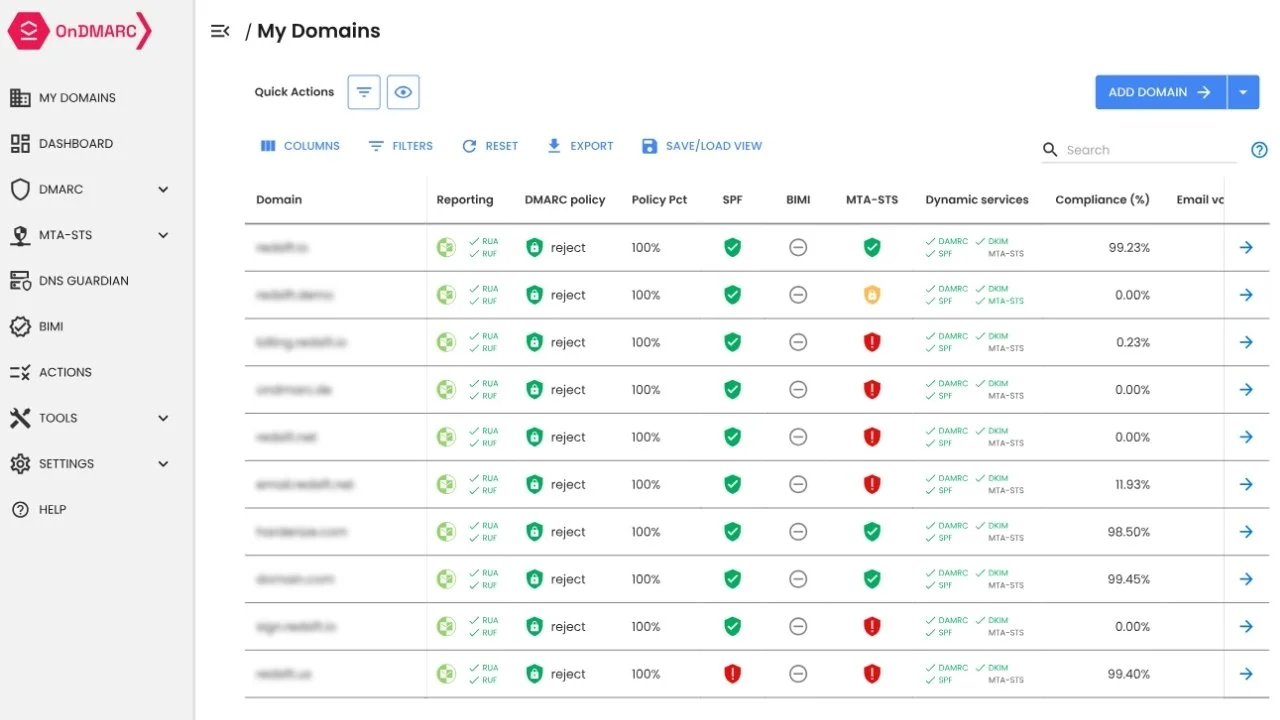
THINKFLEX uses RED SIFT OnDMARC to help businesses implement, monitor, and manage DMARC in a practical and scalable way.
Red Sift provides the visibility and control needed to support a structured rollout, while THINKFLEX helps guide the implementation, review legitimate sending sources, and support ongoing improvement.
This approach helps turn DMARC from a confusing technical task into a manageable protection strategy.
Visibility into email authentication activity
Support for implementation and monitoring
Practical guidance through staged rollout
Clearer insight into legitimate and unauthorized sending behavior
How THINKFLEX Implements and Supports DMARC
We assess your current email authentication posture and identify obvious gaps or areas requiring attention.
1
Review Current Posture
Identify Legitimate Sending Sources
2
We help determine which services, platforms, and systems legitimately send email using your domain.
Align SPF, DKIM, and DMARC
3
We support proper configuration and alignment so the foundation is in place before stronger enforcement is introduced.
We guide a staged implementation approach that improves visibility first, then strengthens protection over time.
4
Roll Out in Phases
We support ongoing review and adjustment to help maintain accuracy, reduce disruption, and improve protection.
5
Monitor and Refine

A Practical Phased Rollout
Strong DMARC implementation is usually not a one-step project.
A practical rollout helps your organization improve visibility first, confirm legitimate sending sources, and move toward stronger enforcement in a controlled way.
Phase 1 - Monitor
Gain visibility into current email authentication activity and identify legitimate senders.
Phase 2 - Align
Correct issues, validate sources, and improve overall email authentication posture.
Phase 3 - Enforce
Move toward stronger policies that help reduce unauthorized use of your domain.

Business Benefits of Stronger Domain Protection
A well-implemented DMARC strategy delivers measurable business value beyond technical compliance.
It can help your organization:
reduce spoofing and impersonation exposure
protect trust in business communications
improve visibility into email activity affecting your domain
strengthen confidence for staff, clients, and vendors
support a more mature email security posture
This is about reducing risk and improving control over an area of business communication that attackers commonly exploit.
Why Work with THINKFLEX
THINKFLEX combines practical cybersecurity guidance with structured Red Sift implementation support to help businesses strengthen domain protection without unnecessary complexity.
We focus on:
practical execution
clear business relevance
staged implementation
ongoing support aligned to your environment
Our goal is to help you reduce impersonation risk with a solution that is realistic, cost effective, and manageable.
We've protected hundreds of domains and prevented millions in potential fraud losses for Canadian businesses.

Ready to Strengthen Email Impersonation Protection?
Spoofed and impersonated email can damage trust, create confusion, and expose your business to unnecessary risk.
THINKFLEX can help you assess where you stand, improve protection, and support a practical path forward.